Exhibits
What’s on display at the Kronau Museum?

Back to the Future
Saar School
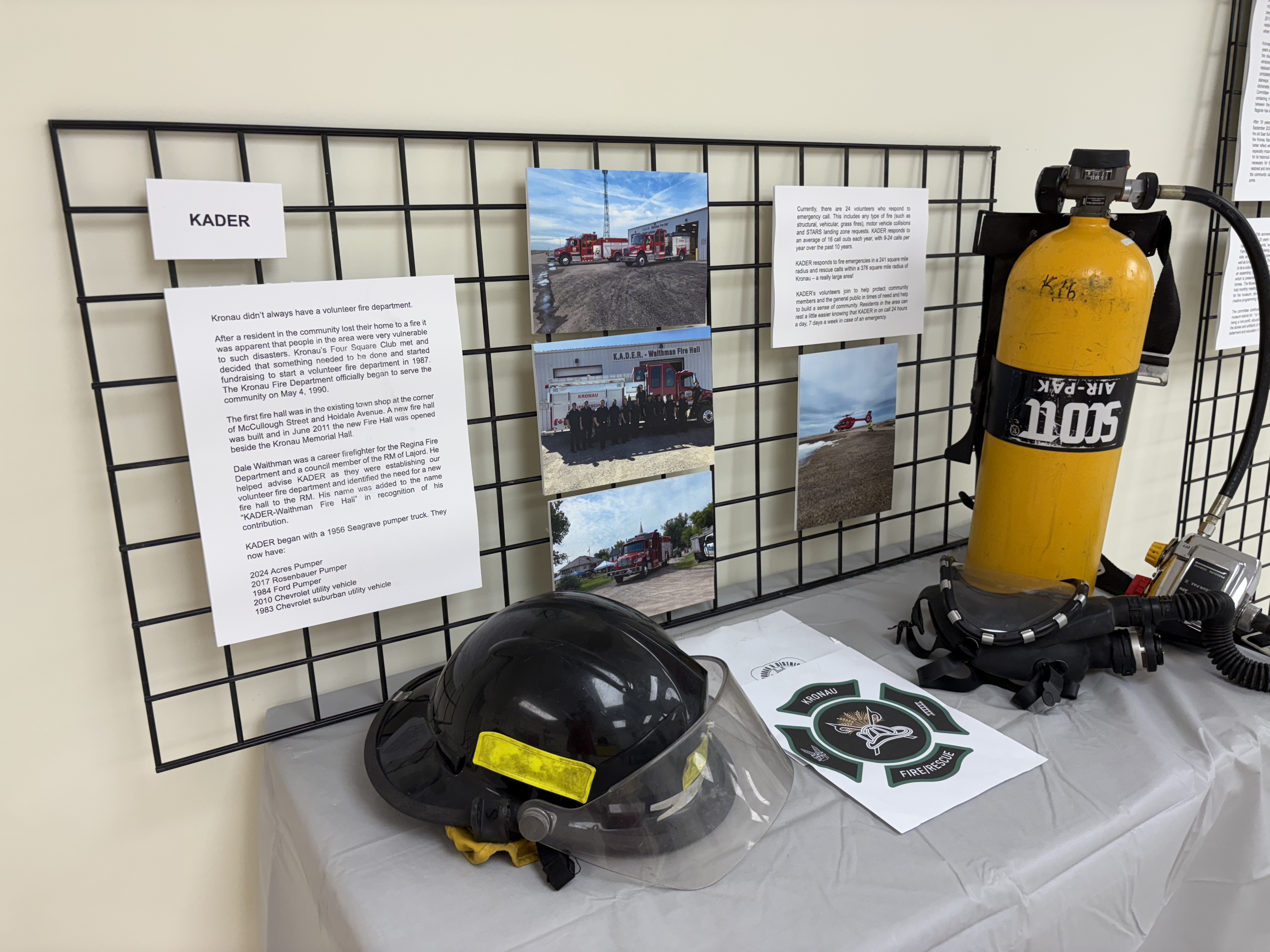
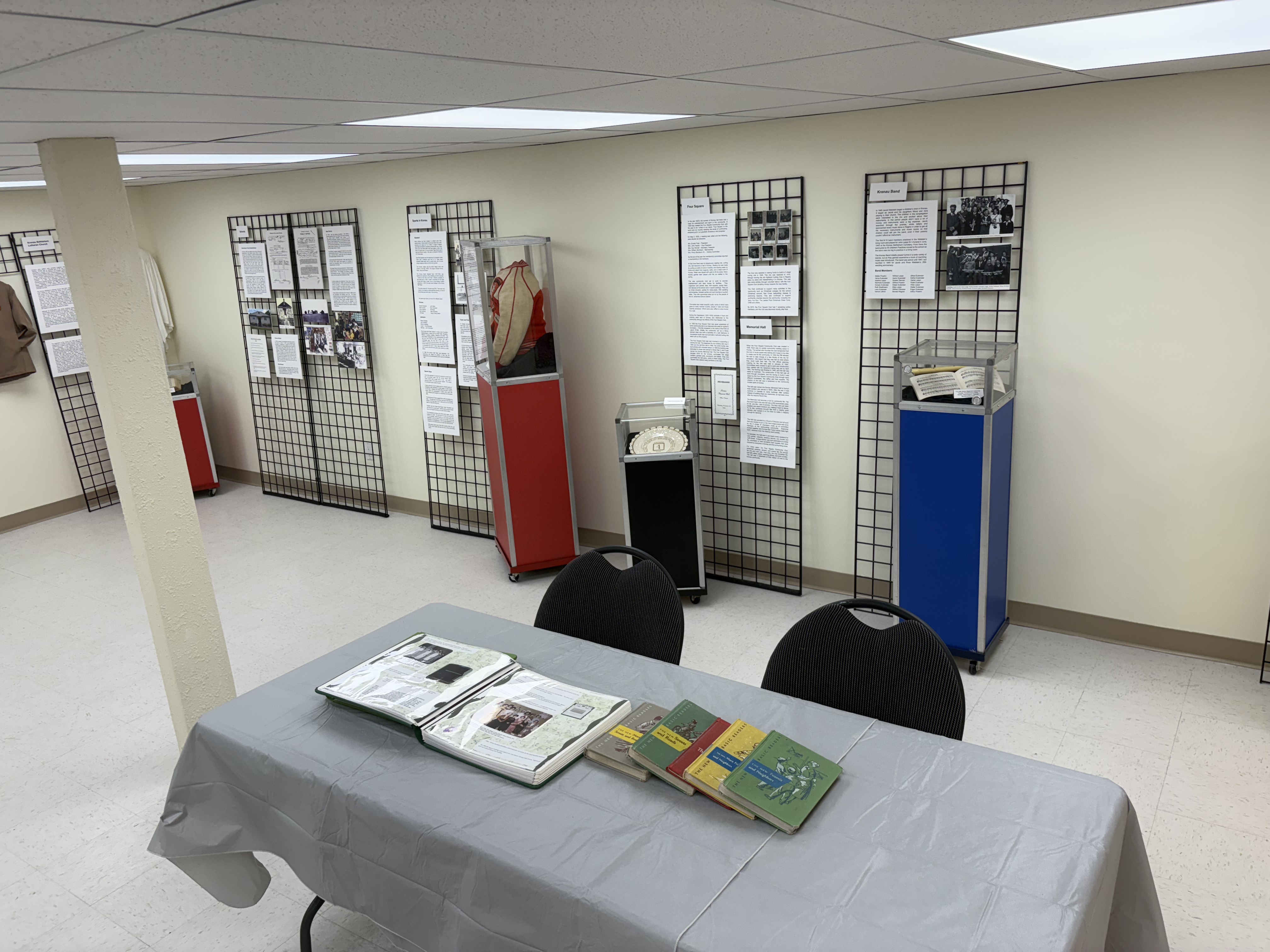
The 2025 summer exhibit at the Kronau Marvelous Museum & Creative Corner is called Back to the Future. Back to the Future highlights the past, present and future of Kronau and its surrounding community — a journey through time that honours the rich heritage, vibrant present, and bold future of the community.
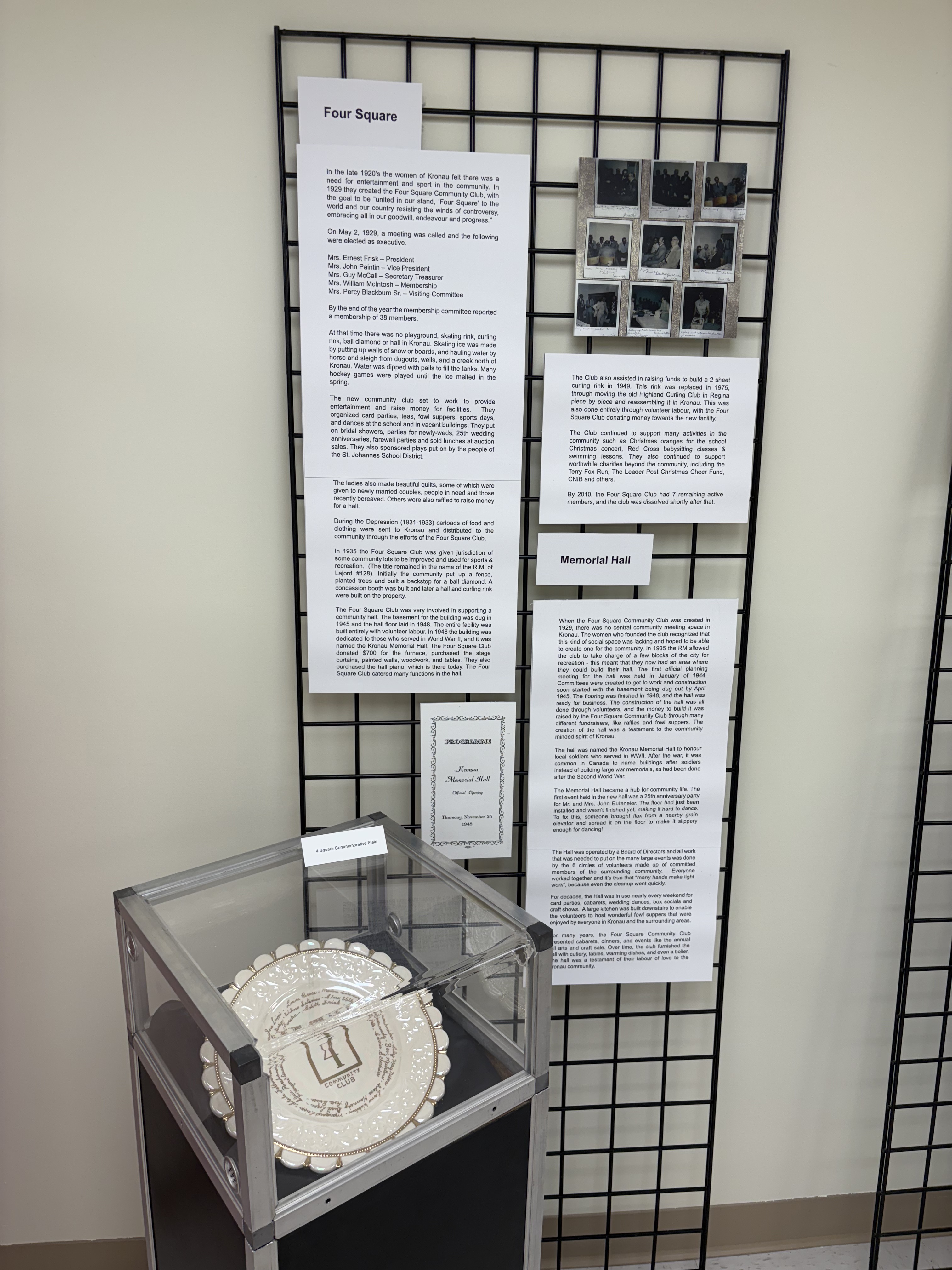
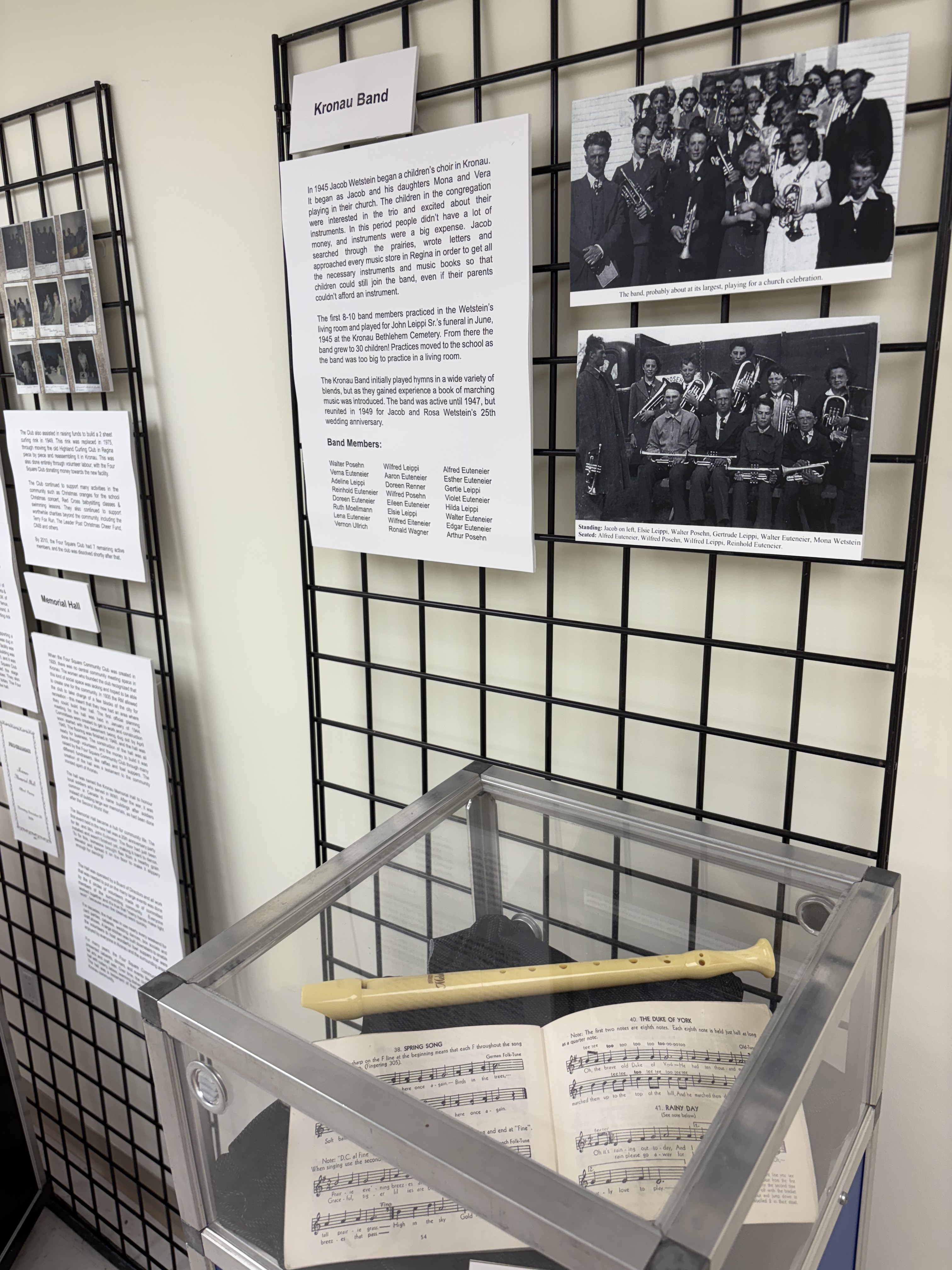
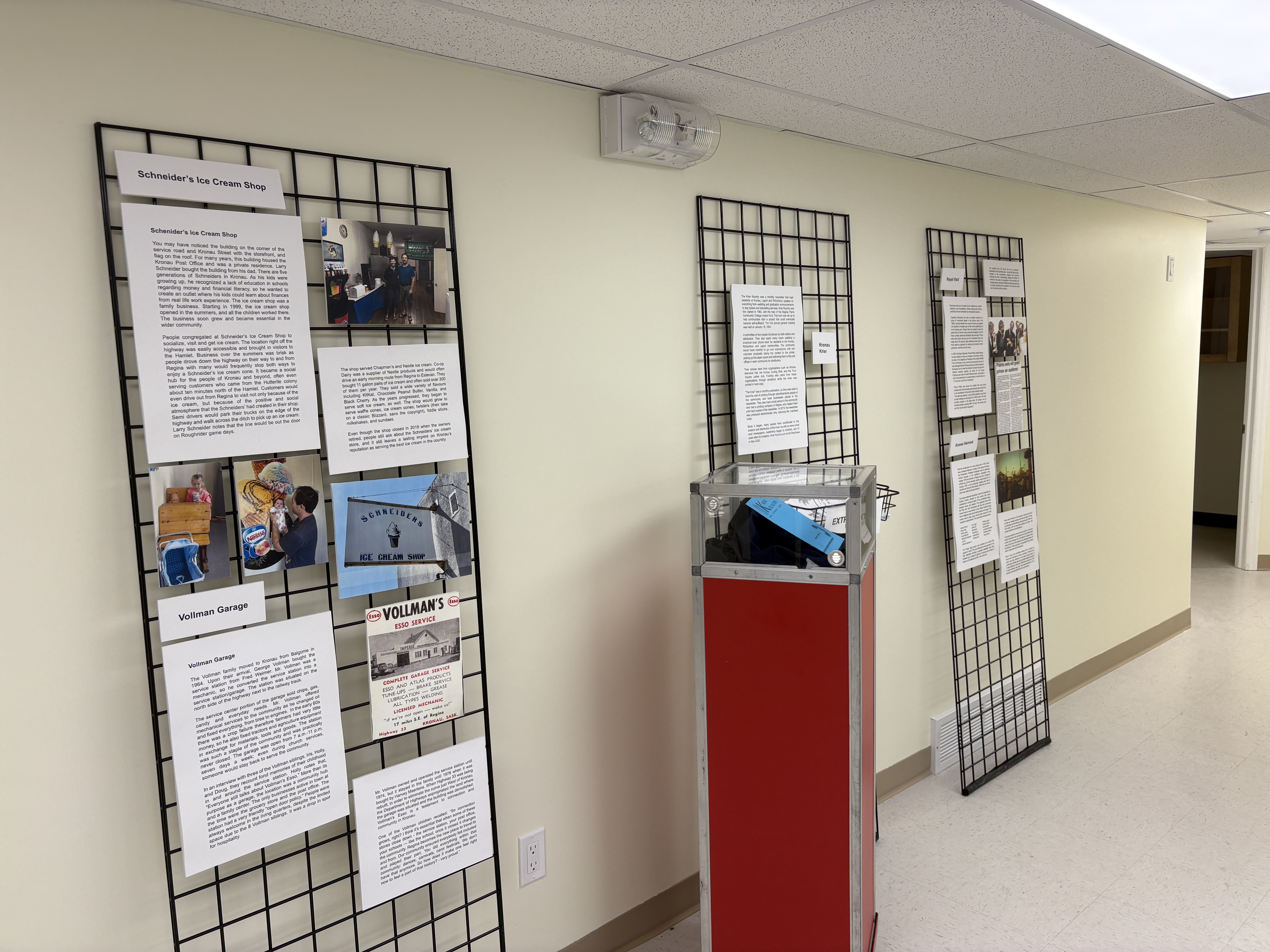
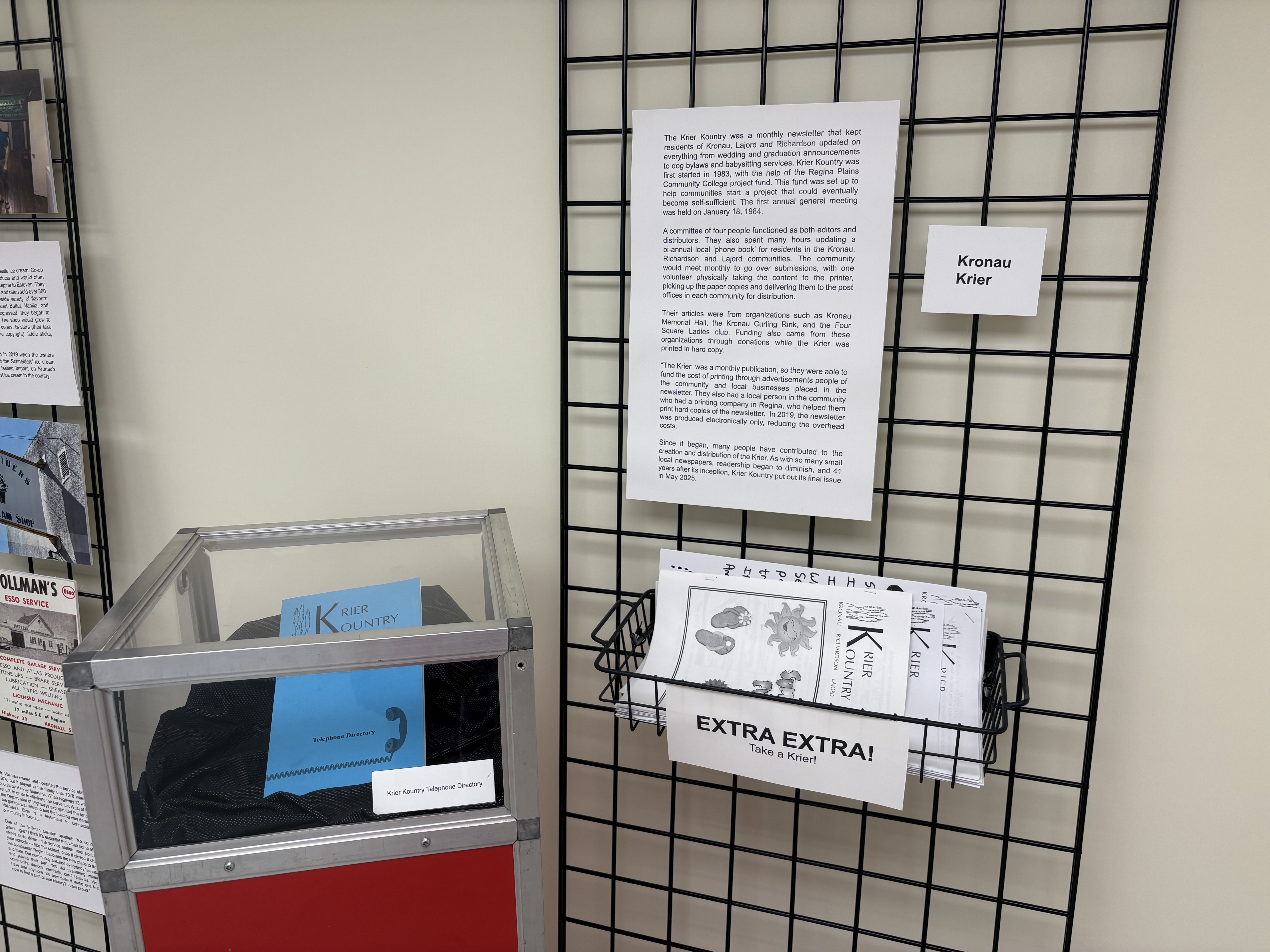
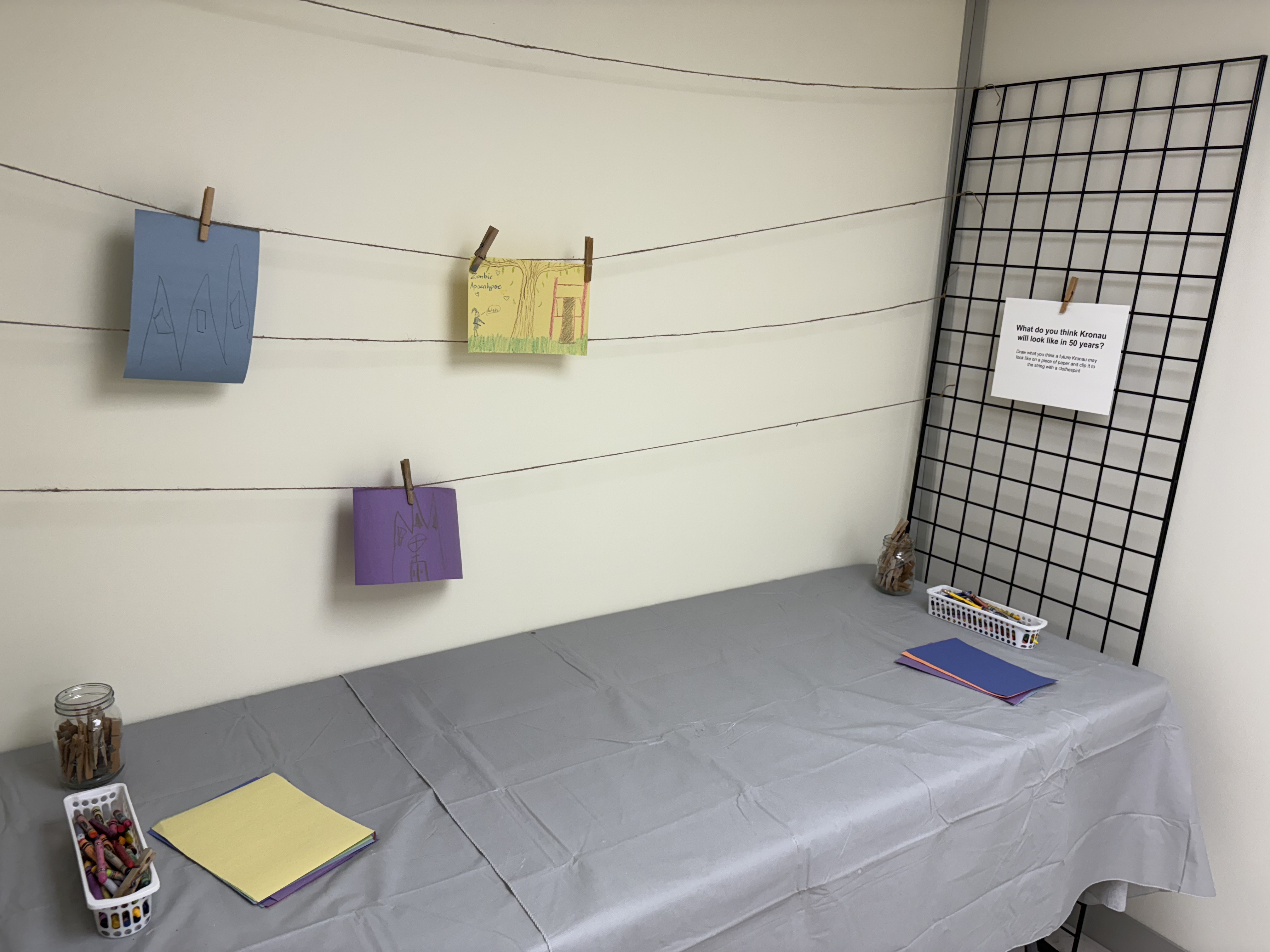
Kronau, Saskatchewan is more than just a dot on the map; filled with history, community and charm. Step back into the past to discover the early settlers in the region and the foundations and key buildings of the community. Explore the tales and places that define Kronau – from homesteads and churches to schoolhouses and curling rinks. We reflect on the past and present, while looking ahead to the future: what will Kronau look like for the next generation?
This is Kronau – then and now. Come to the museum to see this brand new feature exhibit!
Thank you to all who have donated artifacts displayed in the exhibit and all who have contributed to the museum throughout the years, we value your continued support toward the preservation of our history. Special thank you to Amanda Weinberger for providing us with information on the Kronau settlement.
This exhibit will be available for the public to view for the next two summers.

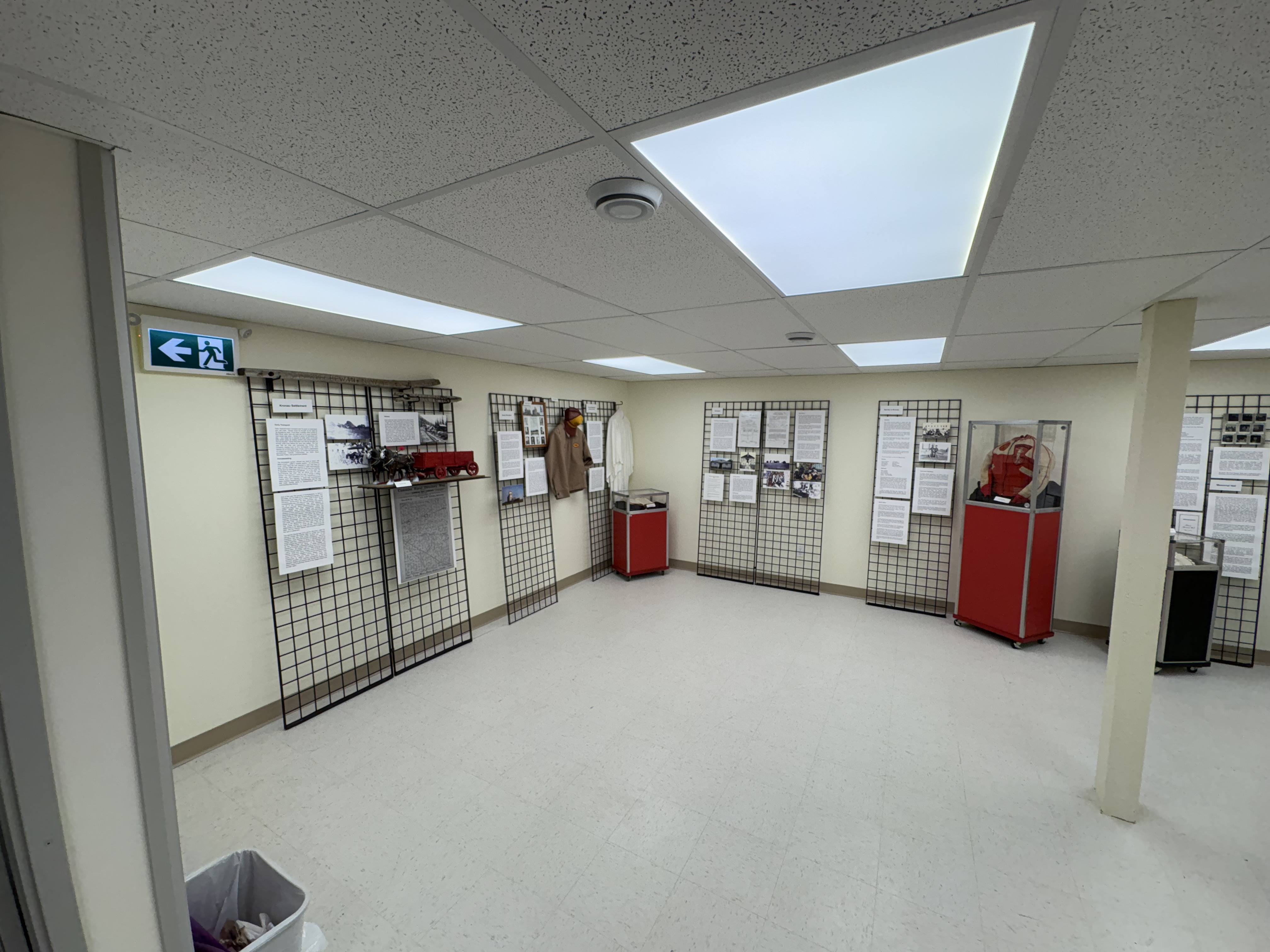


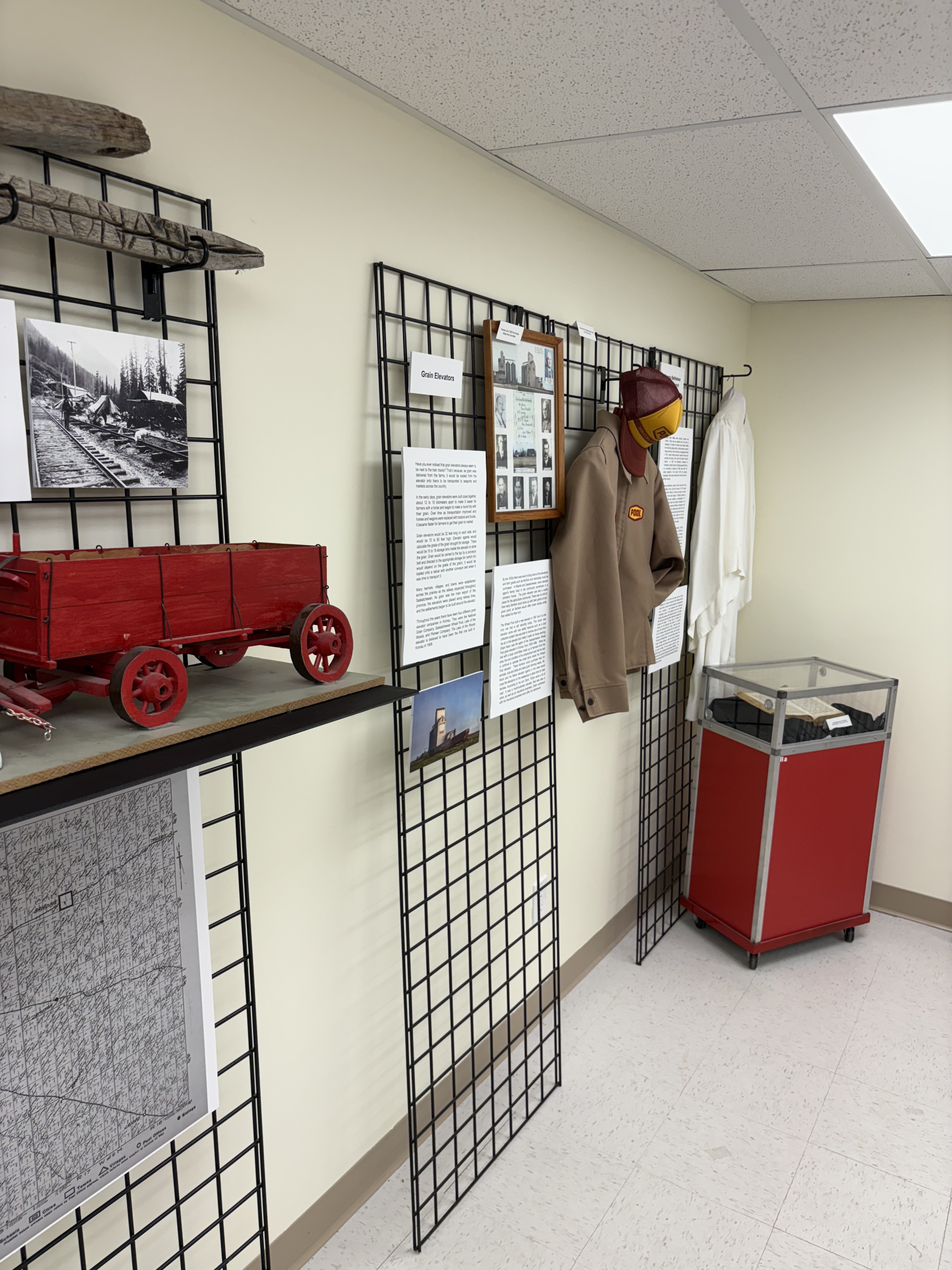
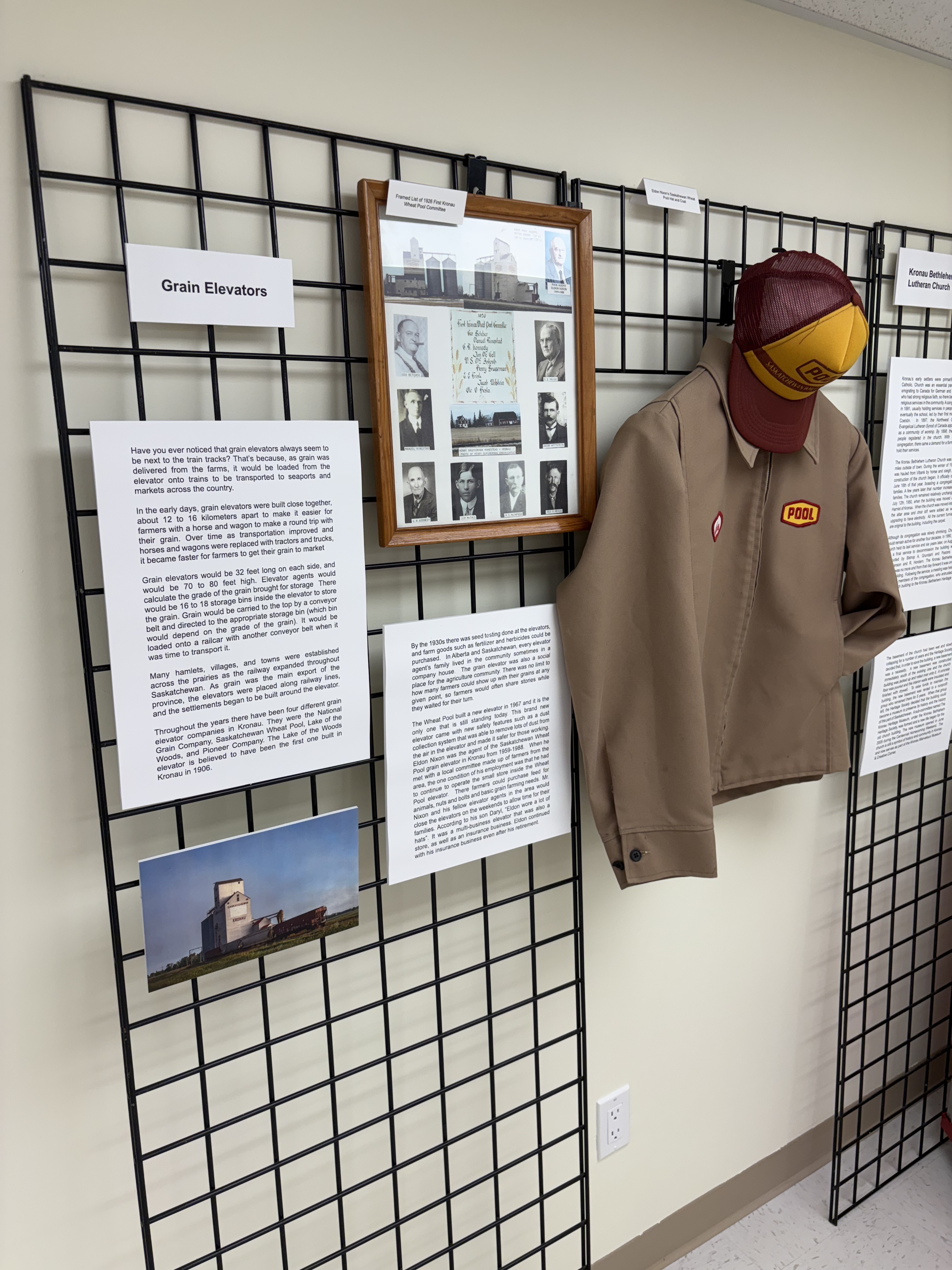
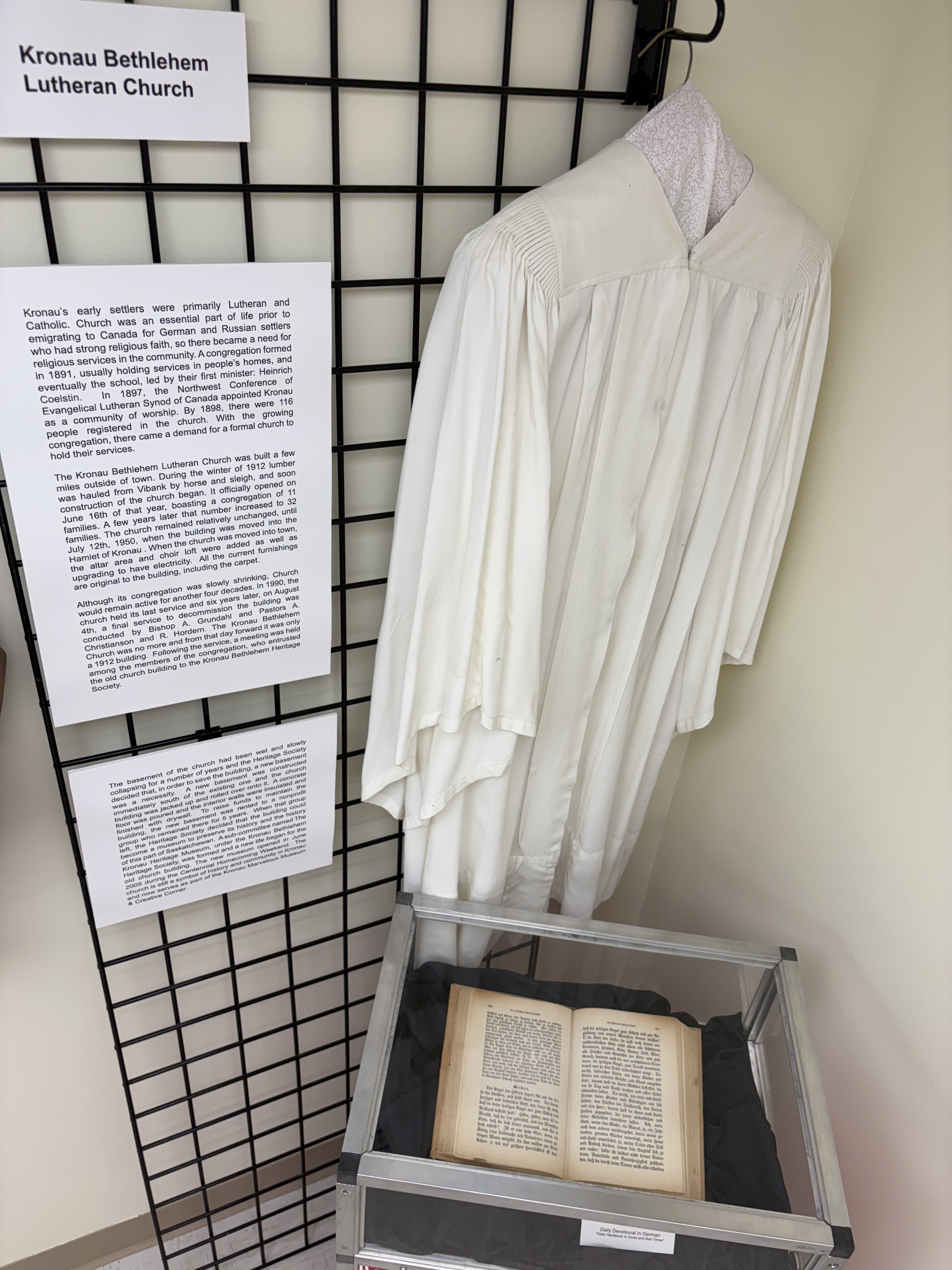





Free Sod to Turn and Till: History of Kronau
Kronau Bethlehem Lutheran Church
The exhibit is armed with information about European immigrants who set out to find the newly created Dominion of Canada. Desperate to escape economic and political turmoil in their home country, many clung to the hope that Canada was all it boasted to be.
“Very mistaken ideas prevail in the Old Country as to the climate of the Canadian North-West. Every extreme of hardship is associated with it by many people. Nothing is further from the fact. No doubt there are conditions of decided heat in the Summer and cold in Winter. The thermometer will sometimes range 100 in the shade in Summer and 30 below zero in Winter. But these extremes will continue for only a few days at a time out of 365… The winter is considered most enjoyable, though each season has its pleasures, and it is this variety, combined with the sunny sky and pure healthy air which constitutes the great charm of the climate.”
— The Canada North-West Land Company Ltd.’s “A Practical Hand-Book for Manitoba And the North-West Territories Containing Important Information for Intending Settlers,” compiled by W. B. MacDougall (1883).
Kronau was only one of many areas settled during the government-stimulated wave of western expansion in the late 1800s. Between the Homestead Act, which sold quarters of land to immigrant farmers for $10, the completion of the transcontinental railway in Regina in 1883, and the 1897 Crow’s Nest Pass (which established low freight rates), Saskatchewan was the fastest-growing province by the turn of the twentieth century.
The first Kronau settlers oriented themselves near the track and those who followed would venture farther out. Major immigration to Richardson began in 1882 and St. Joseph’s Colony was established in 1886.
These settlers were predominantly European immigrants from the Black Sea area of Ukraine (then Southern Russia). These first pioneers came from the district of Cherson and the city of Odessa. Immigrants had left both Roman Catholic and Lutheran villages back home, so they aligned themselves along similar religious line once arriving in Canada.
The first record of settlers near Kronau was in 1880, when a wave of Catholics moved into the area. More arrived in 1891 and 1892 before a period of lessened immigration began in 1894.
The first Lutheran family in the area was that of Michael Bühler in 1891. During the fall following his immigration, several more families settled the area southeast of Kronau’s current location. They named this settlement Kronau after the region in which they had lived in Russia. A document dated October 1898 lists 116 persons registered at the settlement.
In 1897, the Lutherans also established a colony two miles southeast of the current Kronau hamlet. The surveyed plans indicate that there were more than forty lots.
However, this colony did not last long due to the arrival of the Canadian Pacific Railway in 1903, whose surveyors named the northwest quarter of Section 33 as Kronau’s town site. The store, which had been built in the colony, was moved to the new location and soon, business began to flourish. By then, English and Scottish immigrants had joined the mostly German Roman Catholic and Lutheran population.At the turn of the twentieth century, people from the United States began to move west of Kronau, toward Estlin and Gray. Rather than settling the area south of Wascana Creek – because of the creek, the land’s heavy soil, and its distance to the railroad – the pioneers settled in the area of Riceton. They’d arrive in Kronau via train, then cross the Wascana in early fall and winter. With them came farming equipment, and granaries were built near elevators around Kronau so that their grain could be sold. The railroad line (CNR) was completed at Riceton and Gray in 1912. More details about the Kronau Colony can be found in the history book, Leippi Lineage at Kronau Museum.
Saar School Legacy
Saar School
This display serves as a time capsule for the lasting effect that Saar School has left, and an ode to the importance of education. The upper level of Saar School houses prized artifacts from years of schooling, including Saar School clothing, trophies from Edenwold School, and a very special display dedicated to previous Saar class photos, as well as excerpts from a comprehensive book provided by former Saar School staff member, Mrs. Drake. As an extension of this exhibit, we also have a schoolroom that contains antique desks and books from the early 1900s and beyond.
Saar School was built in 1926, in a settlement a few kilometers outside of Kronau. The school was initially built because Scott School had become too overcrowded. In southern Saskatchewan, each settlement built their own schools, which were about 8 miles apart. The schools, such as this one, were one room, employed one teacher and simultaneously taught grades 1-10. Schools were utilized as community hubs for many events, such as church, dances, and weddings. The old Saar school was the last school building in Kronau to be governed by a local authority. In 2008, Saar School was moved to its permanent location beside the Bethlehem Lutheran Church, and in 2010 it became a designated Municipal Heritage site. The museum did extensive fundraising and restoration began in 2011, with renovations finally being complete in June 2024.
 Kronau Marvelous Museum & Creative Corner