Remembrance Day is all about acknowledging and honouring the sacrifices of those who have fought for Canada. As such, I thought it would be a good opportunity to talk a bit about wartime in Saskatchewan and highlight some of the military items within our museum collection. A majority of the military related items that we have are from the Second World War (and this is also where I specialized in my education) so a lot of what I have to share comes from that era.
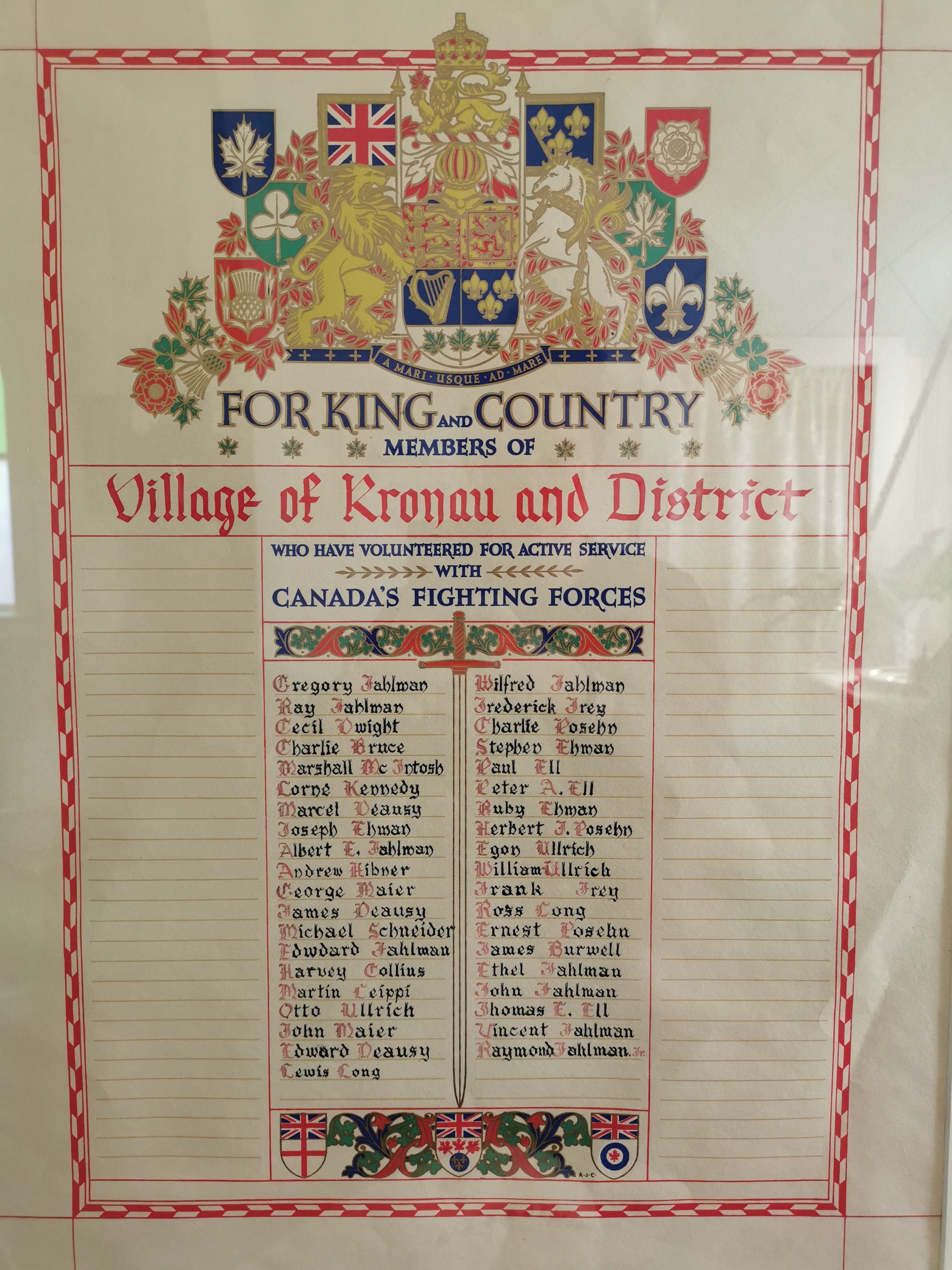
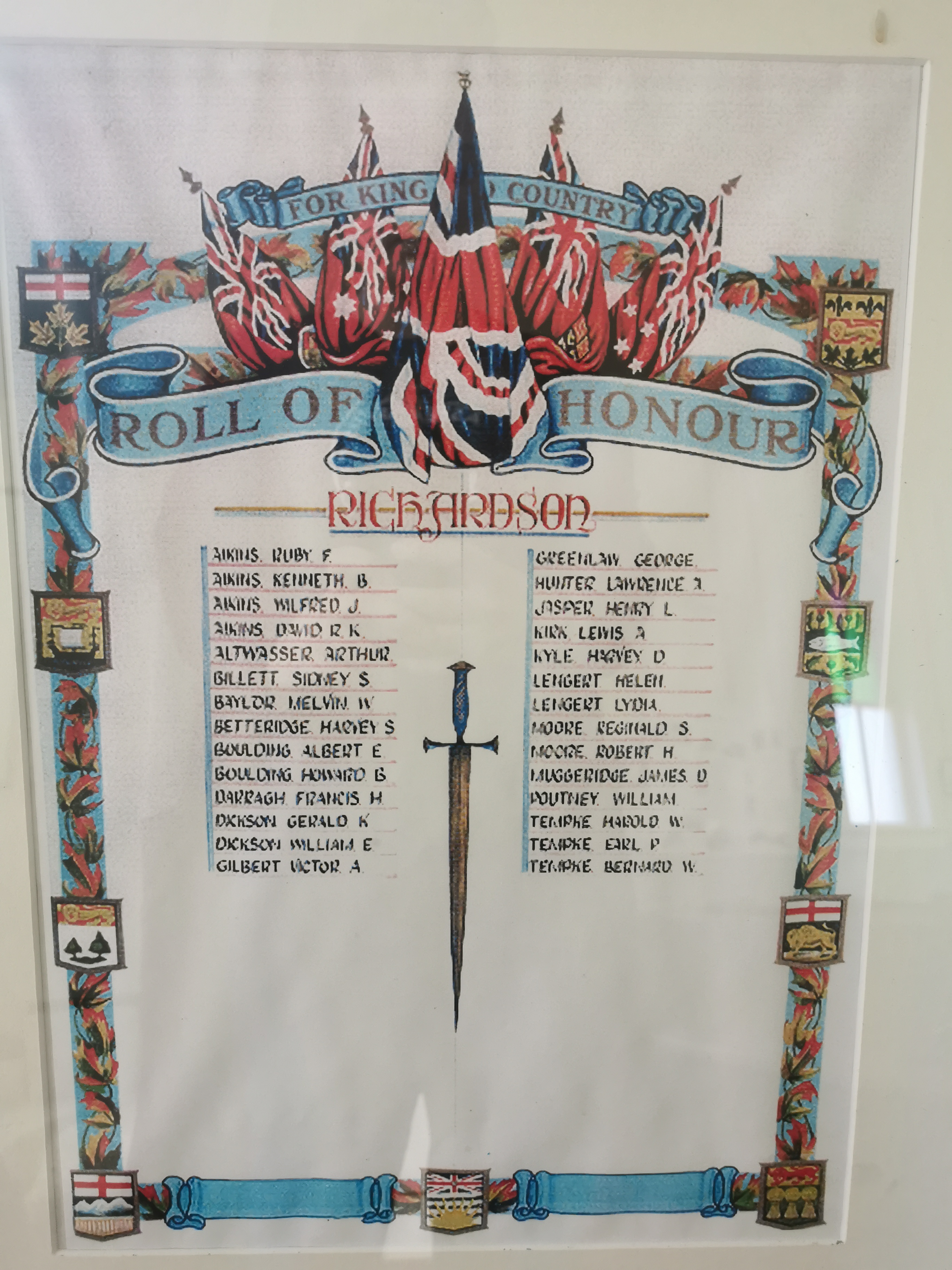
However, the First World War touched Kronau and the surrounding area as well. In our church building you can find the original copy of the Kronau Roll of Honour framed at the front of the church. We also have a copy of the Roll of Honour for Richardson on display. The Roll of Honour was a way to commemorate those who fought in the First World War and were made by communities, schools, and businesses to honour those who served. The Kronau Roll of Honour on display shows the names of the 39 men from Kronau who served during the war. Both Honour Rolls in our collection can be viewed above.
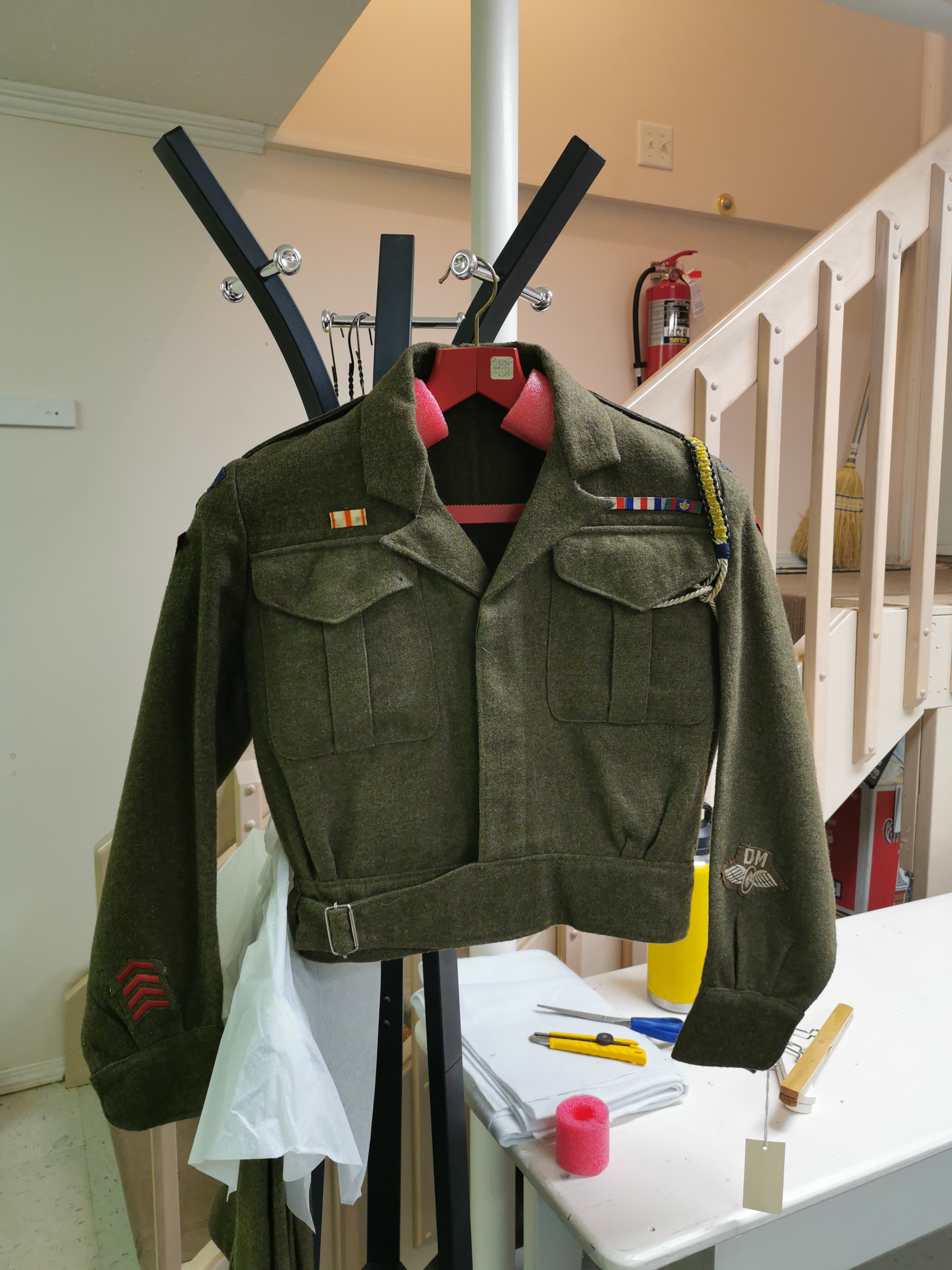

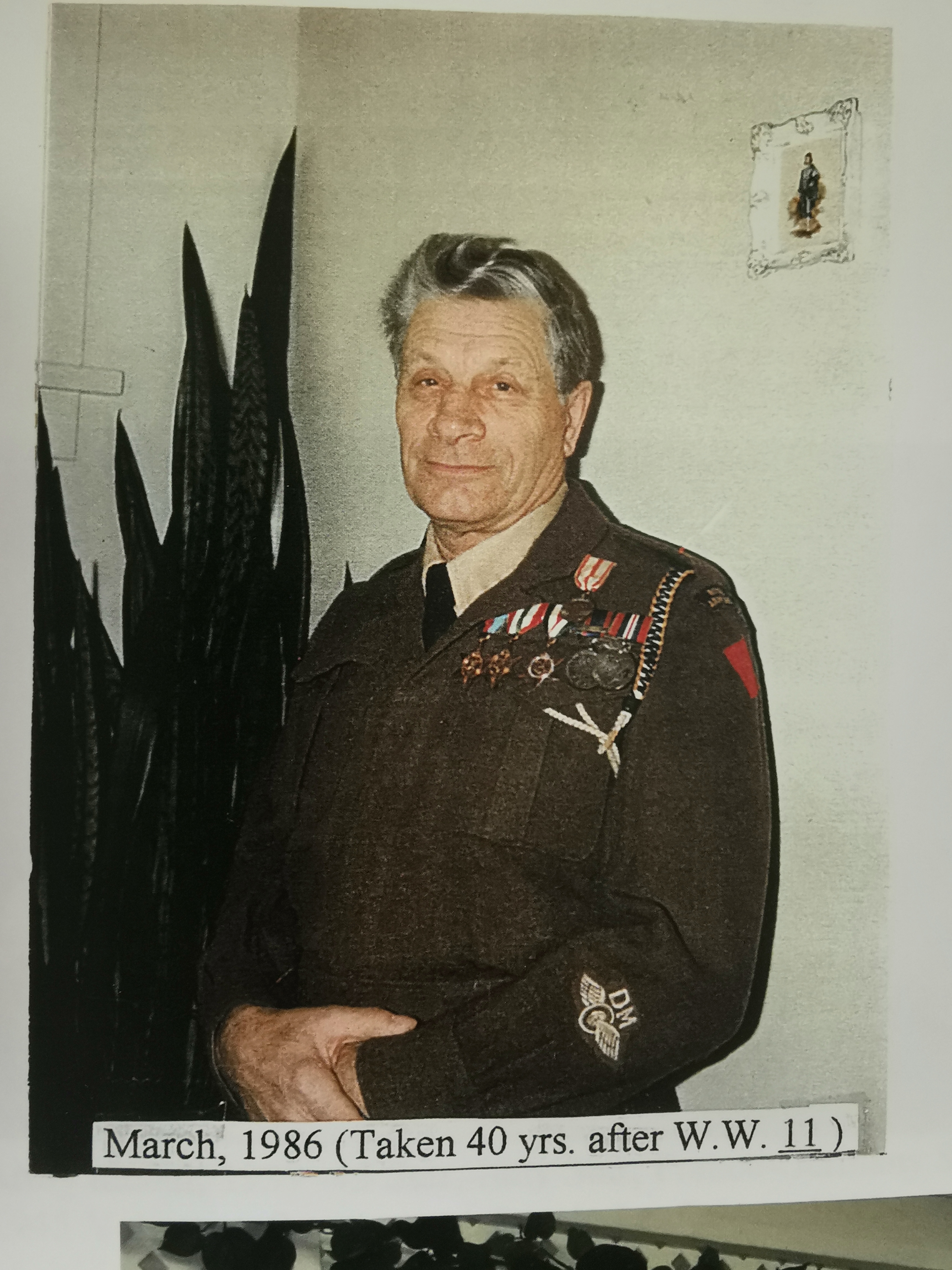
Fred Frey’s Royal Canadian Army Corp uniform (it shrunk a bit when he washed it before donating!)
During the Second World War, one of Canada’s most important contributions was the creation of flight training schools throughout the country where British and Commonwealth soldiers would undergo air force training. Canada was seen as an ideal place for these training bases as it wasn’t too close to the action in Europe (and therefore safe from Hitler’s bombing campaigns) but wasn’t so far away that it was difficult to move troops and supplies. The Canadian prairies were seen as the best bet for air training bases because they were flat, making it easier to learn how to pilot a plane than if you were learning in the middle of the Rockies! As the flattest province of them all, Saskatchewan wound up with the most training schools out of every province in Canada. According to my research there were around fifty training centres, bases, and schools in the province. As a result, one fifth of all pilots trained under the BCATP were trained in Saskatchewan and up to thirty percent of some aircrew positions were trained here as well. A pretty sizeable contribution to the war effort!

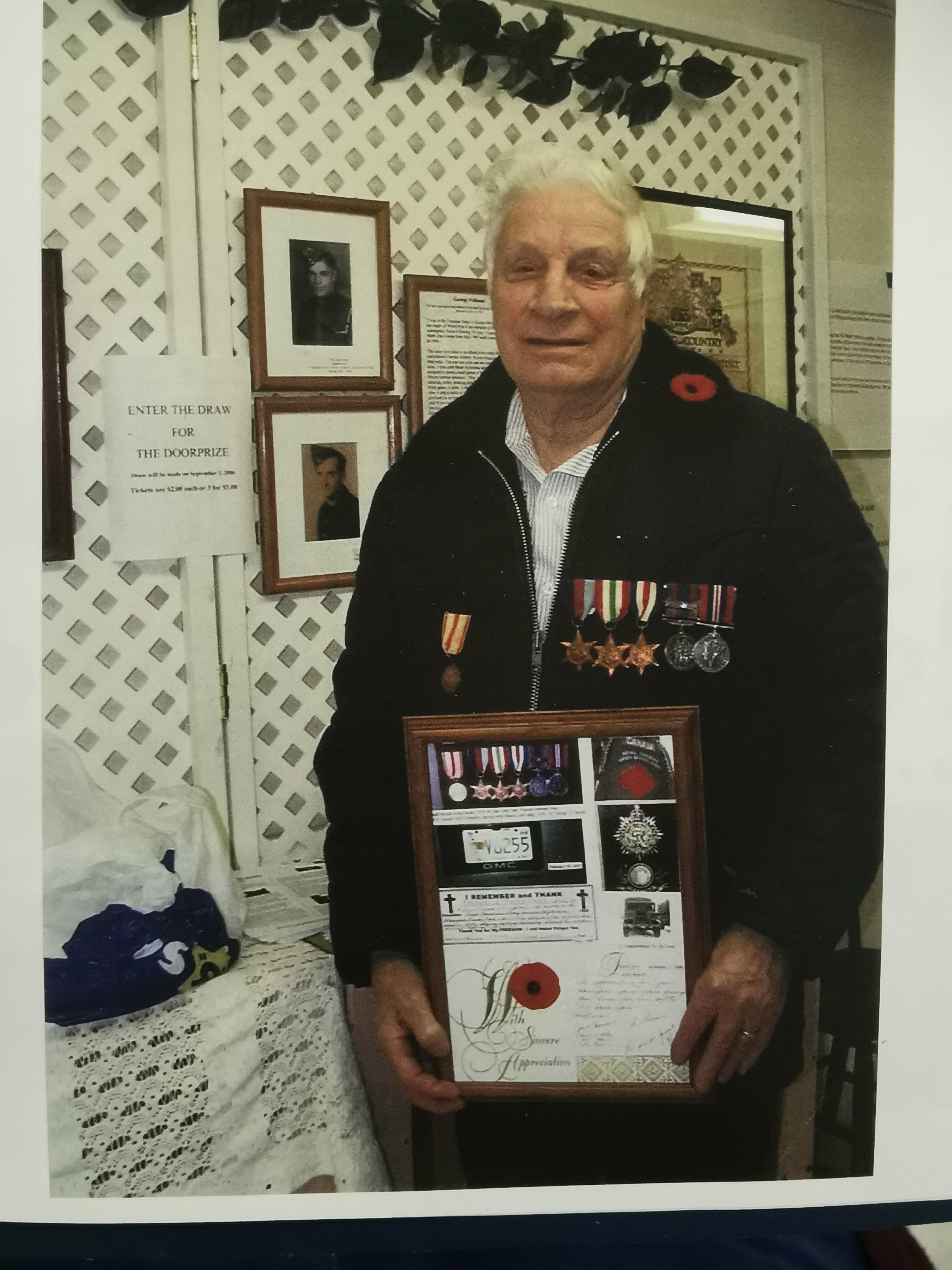
Within our collection, we have a lot of war artifacts from Fred Frey, a Kronau resident who served in the Army Corp during the Second World War. Fred was a big supporter of the museum and sadly passed away in 2016. Within his collection, we have his army uniform, photos, and other military ephemera (like the radio set pictured above).
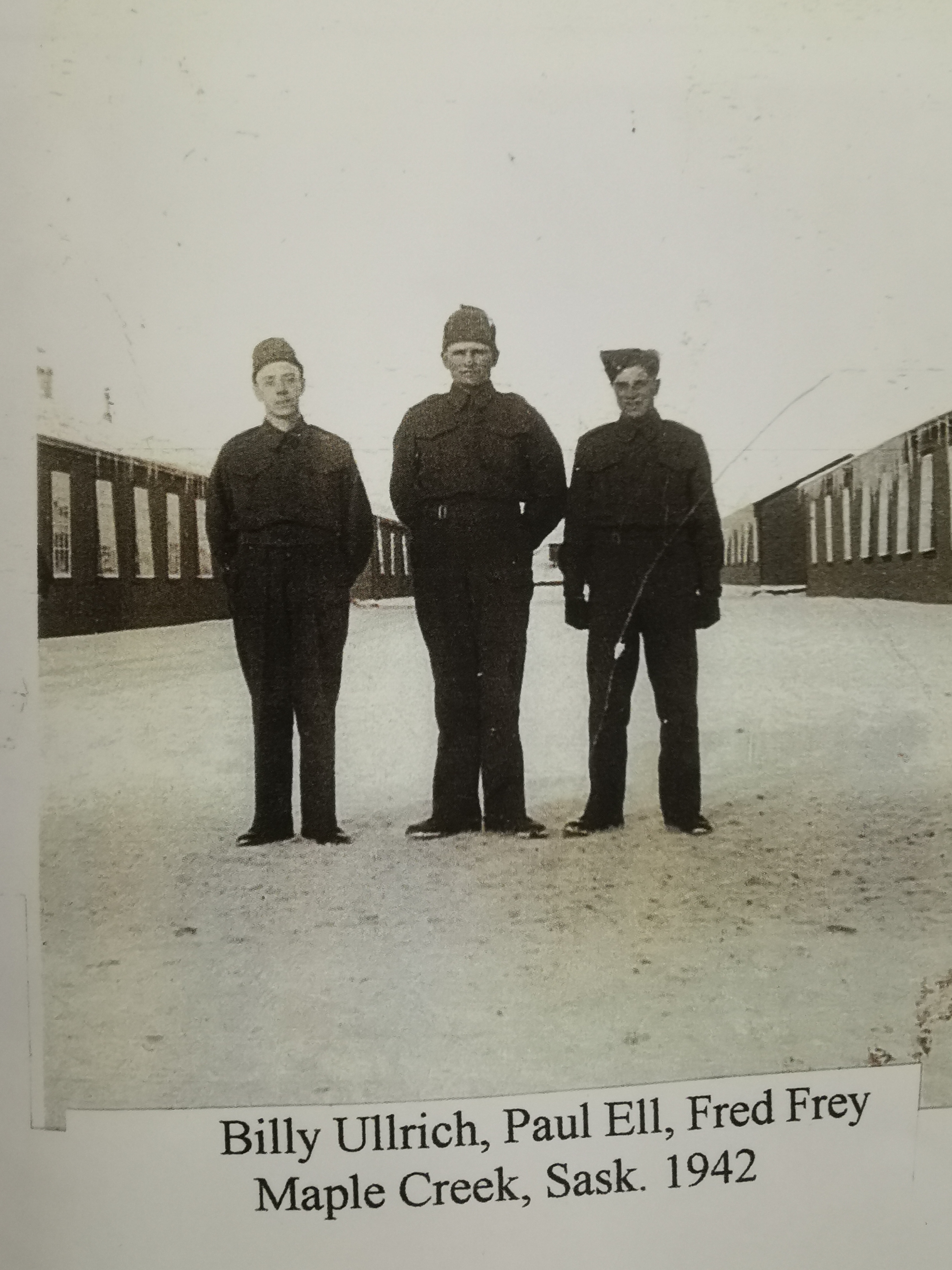
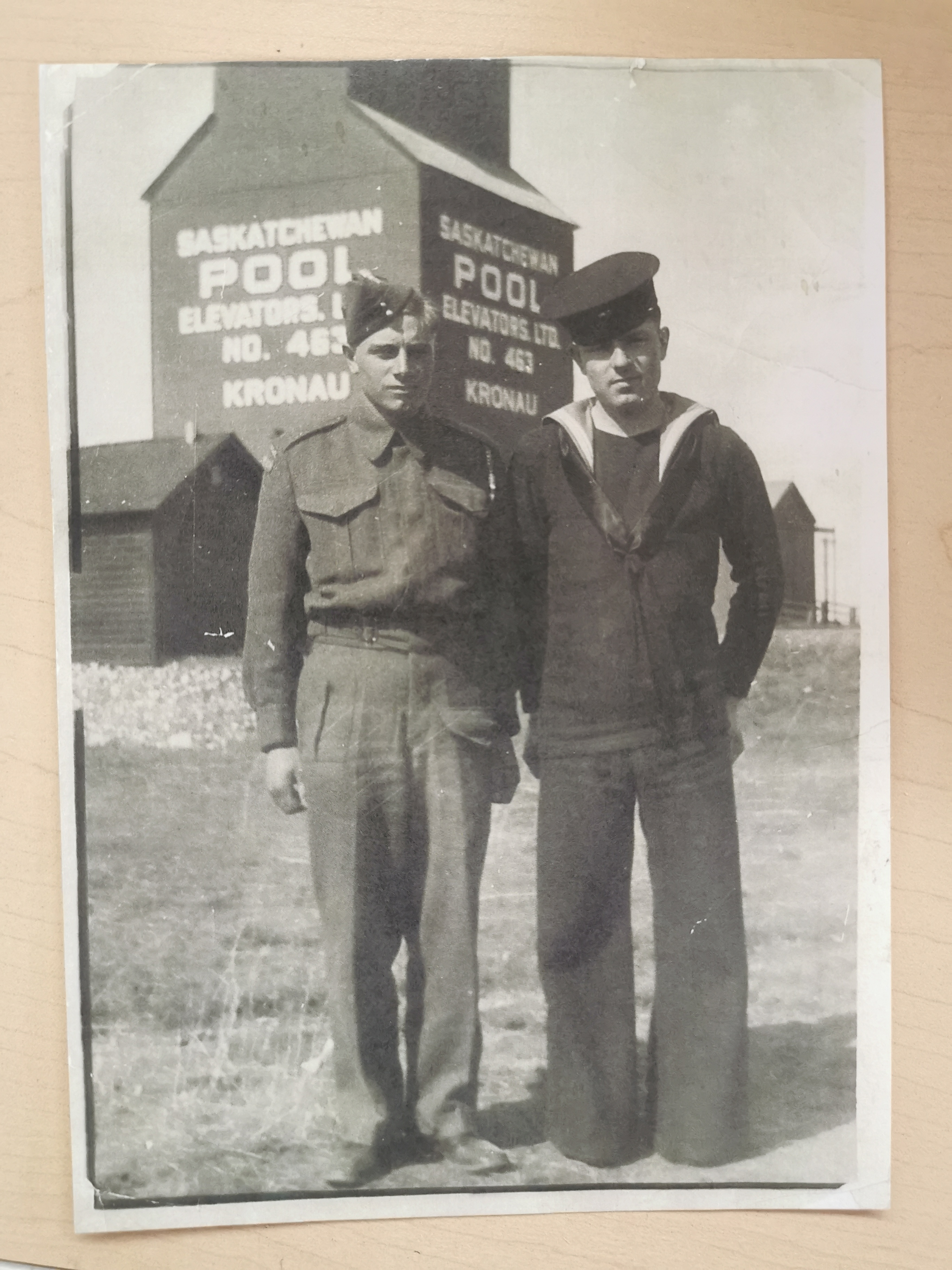
Fred Frey was called to report for army service in November of 1942 and completed his basic training in Maple Creek, Saskatchewan. After which he went to Red Deer, Alberta for further training before being sent over to England in 1943 for even more training and deployment to Italy. He detailed some of his experience in a family history book donated to the museum collection. My favourite line comes from a description of his work in Italy: “We [were] hauling supplies, gas and ammunition. Some very scary trips for a lad coming off the flat prairie, who had never seen mountains before, to drive a three ton truck at night without lights, hairpin turns and getting strafed by Jerry planes and also had to contend with land mines” (pg. 46). How crazy it must have been to go from flat fields to huge mountains!
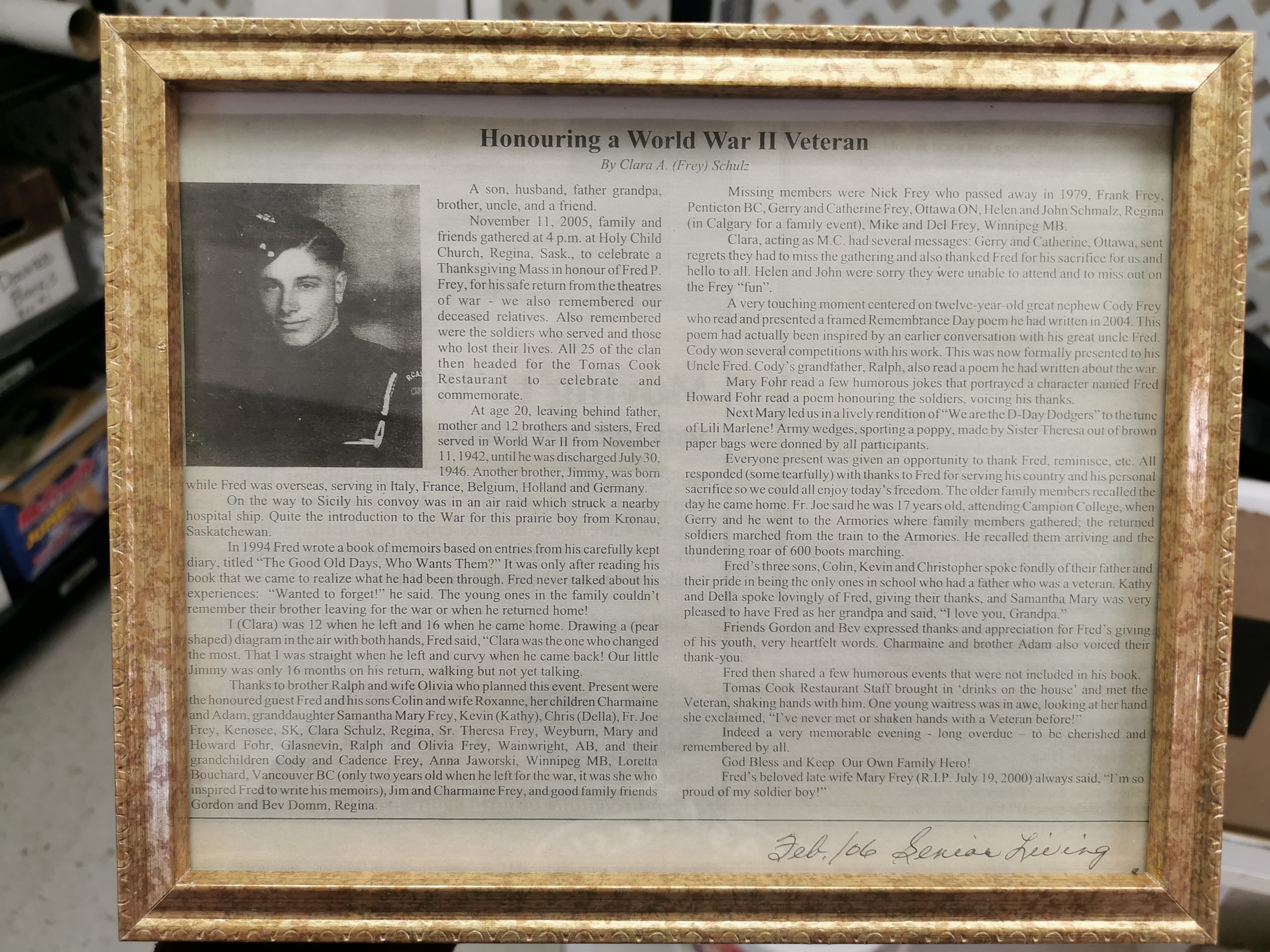
An article written about Fred Frey and his family’s commemoration of his service
Fred served in Italy, France, Belgium, Holland, and Germany working to transport important supplies during the fighting, and driving an ambulance. From looking at the writings that we have, it appears that Fred did not often speak on his experiences during the war. This was often the case for veterans, who did not want to dwell on what they had witnessed. In his later years however, he did write about his experience using a diary he faithfully kept during the war. We’re very lucky to have so many artifacts and writings from his time in the army. They give us a tangible connection to Kronau’s wartime past and the effect that the war had on the community.
War, especially the World Wars, touch all communities in some way. Mass mobilization calls people from all across the country, urban and rural, to serve. As we take time today to honour the brave men and woman who fought for Canada, I think it’s important to think about how war impacts communities like Kronau as well. What it would have been like for those who served to go from a small community to the hustle and bustle of warfare. What it would have been like for those who stayed behind. And what it would have been like for those who returned from war to go back to their regular life on the prairies.
One of our 2024 summer students, Makenna Ling filmed a series of interviews with Canadian service personnel and veterans for our new and updated ‘Bless Em’ All’ museum in a suitcase program. If you’re interested, you can find further information on our website here: https://kronaumuseum.com/bless-em-all-interviews/
Sources Consulted:
Frey, Fred and Father Joe C. Frey. Frey Dielschneider. Saskatchewan: Self-Published, 2003. (2011.005.002)
Greenhous, Brereton and Norman Hillmer. “The Impact of the British Commonwealth Air Training Plan on Western Canada: Some Saskatchewan Case Studies.” Journal of Canadian Studies 16, 3. (Fall 1981): https://doi.org/10.1080/03086534.2014.982416
Hatch, F. J. Aerodrome of Democracy: Canada and the British Commonwealth Air Training Plan 1939-1945. Ottawa: Department of National Defense, 1983.
I was also able to learn a lot from the exhibit information boards from the museum’s previous exhibit on war in Kronau.
 Kronau Marvelous Museum & Creative Corner
Leave a comment