
The first big project that I’ve been working on in the archive since getting things organized is the storage of our textile collection. Since we aren’t a big museum, we don’t have all the resources available to us that a larger organization might. As a result, sometimes you have to get really creative with things! While that might be frustrating at times, I choose to view it as an adventure! Today I’d like to give you a look into how I’ve been working to store and preserve our textiles collection. One of these days, however, we’ll take a look at some of the stories behind these garments cause they are just as (if not more) interesting!
While the textile collection at the museum isn’t huge, it contains some really interesting pieces. We have a Saskatchewan Wheat Pool uniform from the 70s, a army uniform from WWII, and a fair amount of wedding dresses. I’ve even found a beautiful yellow party dress from the 1960s that I wish I could steal!
All of our textiles are in varying condition, some parts of them (like lace) have become fragile with age. In my storage efforts my priority has been to try and reduce the possibility of further damage. To this end, I have been rehanging all of the garments that can be put into hanging storage, I also plan to create garment covers for each of the pieces to give them an extra layer of protection even while hanging in their cedar cupboards.
When a garment is put into hanging storage, the method of hanging is important to make sure that the textile doesn’t get damaged. You don’t want to have a lot of stress of the seams as this can leave the garment misshapen. As well, you want to support the shape of the garment as much as you can.

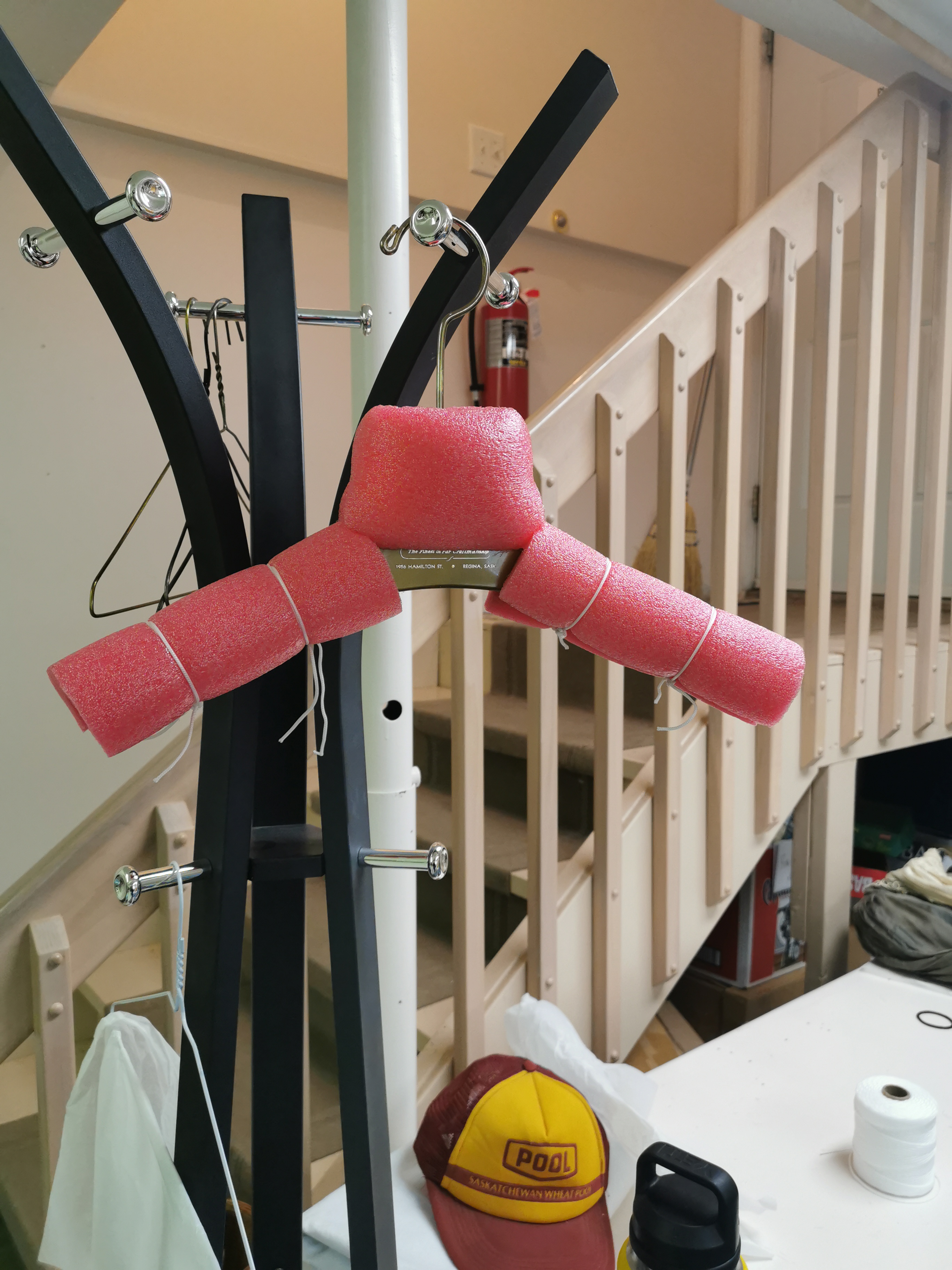
To create my hangers, I used hangers that we already had in the museum (wooden and plastic ones) and added on to them to create support for the garment. I did this using pool noodles, string, and where I needed to, hot glue. It certainly sounds like an odd bunch of objects to use for artifact preservation, but they do the job! You can see in the image above how I added pool noodles to each side and secured them with string – I prefer using string for these kinds of hangers instead of hot glue as it makes it easier to reposition things if needed. As well, for some of these hangers I also tried to shape the ends a little by ‘sculpting’ the foam with an exacto knife to match some garments a bit better.
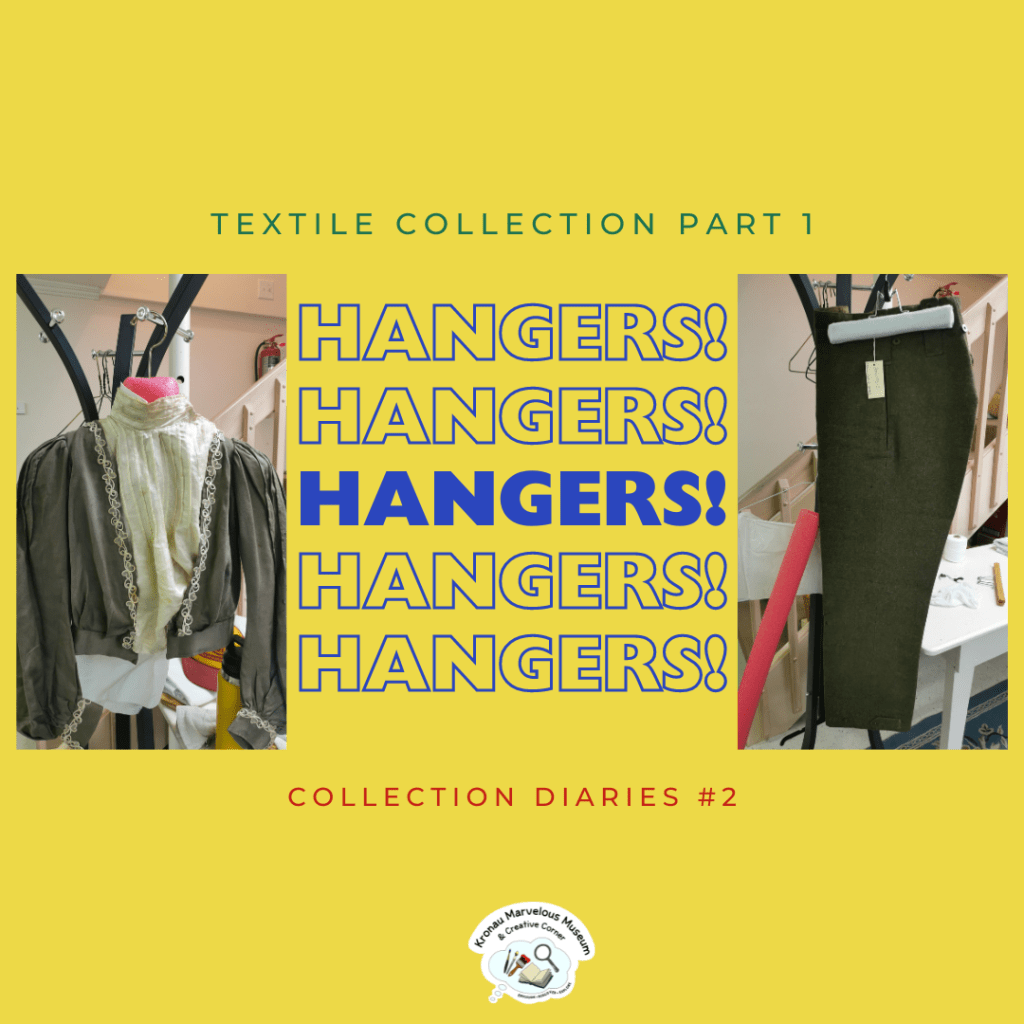
Below, I’ve highlighted two garments that I’ve hung recently – a pair of pants and a Victorian top that I found really interesting to work with as the methods I used were a bit less straightforward.


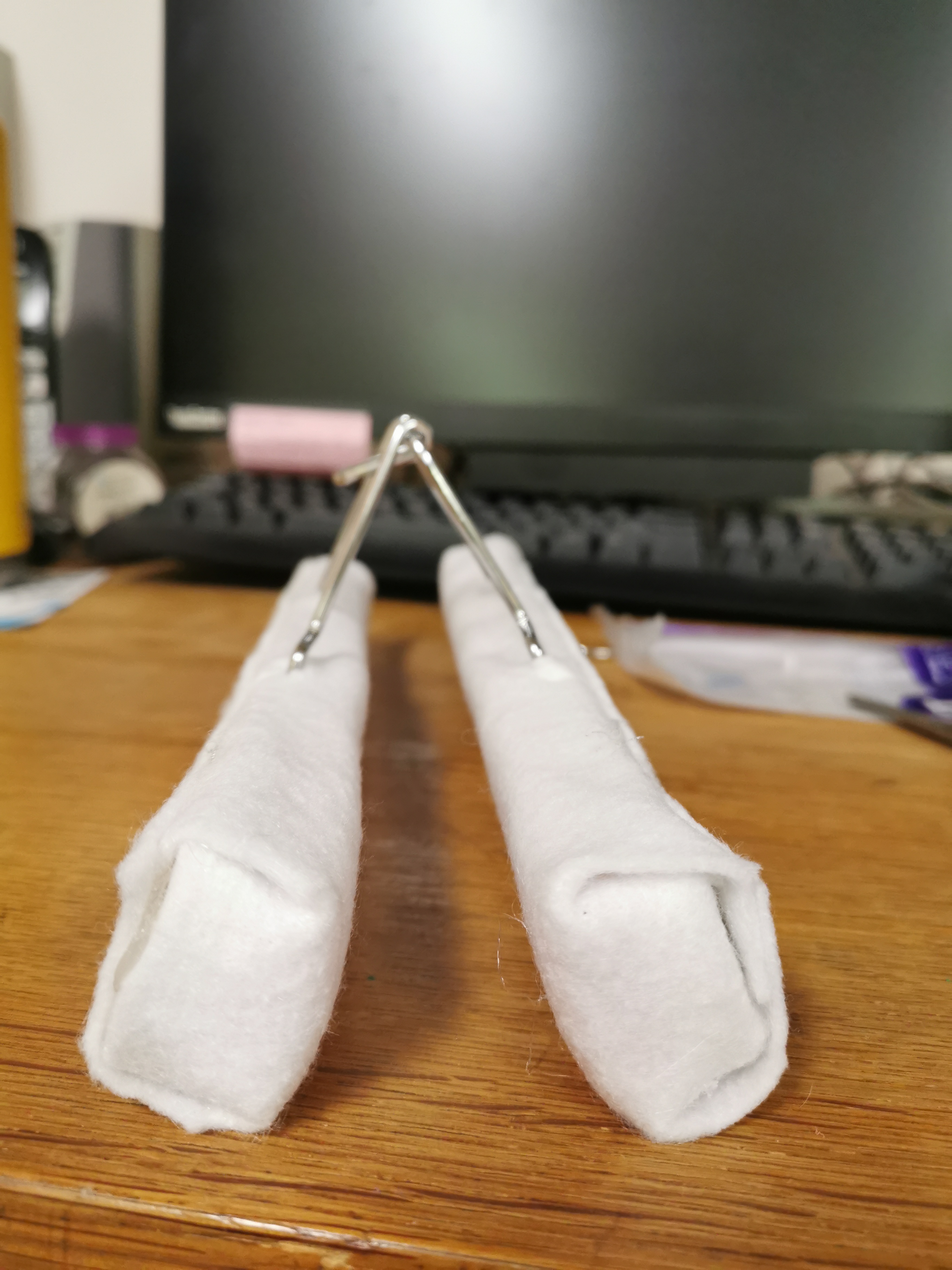
In these photos you can see how I’ve adapted some pants hangers to be used on this pair of WWII army pants. To make these I took an old wooden pants hanger from my closet that doesn’t get used, and I hot glued strips of styrofoam from a pool noodle on the inside of the wooden pieces. This helps to provide some cushion to the garment and stops the hanger from putting too much pressure on the fabric. Then, I hot glued white felt around the wooden pieces – this protected the fabric from any loose foam (as I had to cut these pieces thinner leading to some bits shedding off) and it also helps to prevent the pants from slipping out of the hanger.

In these images you can see what I consider to be a really special textile. This is the top of a Victorian wedding outfit. It’s had a few different homes before us, but we ended up acquiring it as it’s original owner was from Kronau! This piece is over 100 years old, and has some damage to it as a result of age and improper storage throughout it’s life. As a result, we want to make sure that it’s stored in a way to guard against further damage. It’s home, a cedar cupboard, already adds some protection against moths. The way that we hang it can help to protect it too. Here you can see that I’ve attached pool noodles onto a hanger to take some pressure off of it’s seams, and support the shape of the shoulders. For this garment, I also put some support onto the neck of the hangar. This is because the collar on this top is quite high and I didn’t want to have it flopping around while on the hanger. This extra support helps it to keep it’s shape better than if it was hung without it, and has the added bonus of giving us a better look at how this garment would have been worn without the need to touch it.
I hope you’ve enjoyed this look into what I’ve been getting up to these last few weeks! If you have any spare pants hangers like the ones that I’ve been using and want to get rid of them, I would be happy to take them off of your hands! Please shoot me an email at kronaumuseum@sasktel.net if you have any to donate.
 Kronau Marvelous Museum & Creative Corner
Leave a comment